
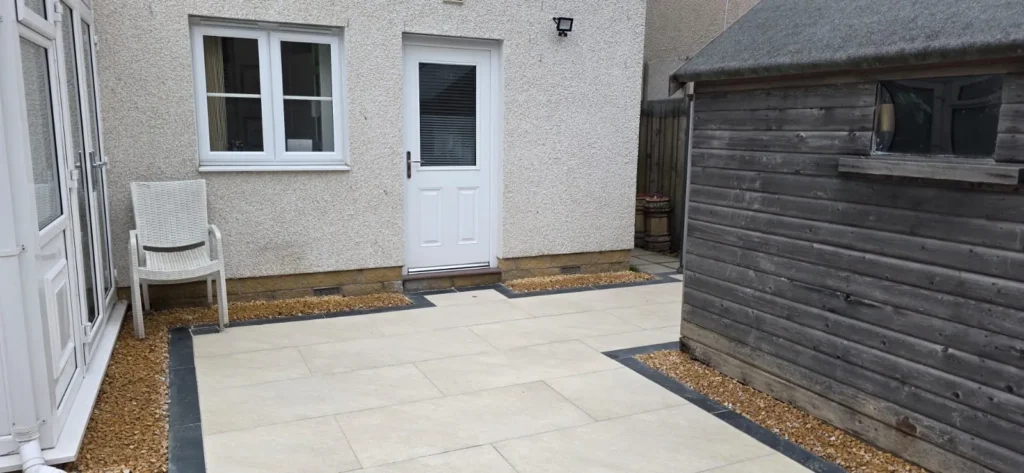
Choose porcelain if you want a clean, modern look that stays that way with very little upkeep. Choose natural stone if you prefer a softer, more traditional finish that gains character as it weathers.
Both last for decades when they are laid on a proper sub-base. Below, we compare them on the things that matter most in a Scottish garden.
| Porcelain | Natural stone | |
|---|---|---|
| Look | Uniform and modern. Can mimic stone, concrete or timber | Natural variation, so every slab is different |
| Maintenance | Very low. A wash down keeps it clean | Occasional cleaning. Some stones benefit from sealing |
| Staining | Highly resistant to oil, wine and barbecue fat | Some stones absorb spills and can mark |
| Algae and moss | Resists it well and cleans easily | Porous stone picks up algae in shady spots |
| Grip | Choose outdoor-rated, textured tiles | Naturally textured surface |
| Repairs | A matching tile can be hard to find years later | A replacement slab blends in more easily |
| Laying | Specialist job: bonding primer and careful cutting | Easier to cut and shape on site |
Most patio problems people blame on the paving actually come from underneath it. Whichever you choose, these decide how it lasts.
Still not sure? We can talk it through at a free site visit. See our patios and paving page for more.
Outdoor porcelain is made with a textured surface for grip. The slippery reputation comes from polished indoor tiles, which should never be used outside.
Not always. A sealer can help some sandstones resist staining and algae, but many natural stone patios are left unsealed and weather naturally.
Outdoor porcelain absorbs almost no water, so frost damage is rare. Cracks are usually caused by a poor bed underneath, which is why the groundwork matters.
Yes. Porcelain with sett or stone borders, or a stone path leading to a porcelain patio, can work very well.
Planning a patio? Call 01236 728098 or request a free quote.